Artificial intelligence is becoming increasingly useful in food distribution, but many distributors face an important question:
“If we adopt AI, do we need to replace our ERP?”
For most food distributors, the answer is no.
Your ERP is likely already deeply embedded in your business. It may manage inventory, purchasing, accounting, customers, pricing, fulfillment, and other critical processes. Replacing it can be expensive, disruptive, and unnecessary.
Instead, AI can be used alongside your existing ERP to automate processes that happen before, around, and after the ERP.
This approach allows distributors to modernize customer ordering and internal workflows without rebuilding the systems that already run their business.
Here are five practical ways food distributors can use AI without replacing their ERP.
1. Turn Emails, Texts, and Voicemails Into Orders
One of the biggest opportunities for AI in food distribution is automating manual order entry.
Many customers still place orders through email, text message, phone calls, or voicemail. Employees then have to read or listen to the order, determine which products the customer is requesting, enter quantities, check pricing and availability, and eventually enter the order into the ERP.
This creates a lot of repetitive work.
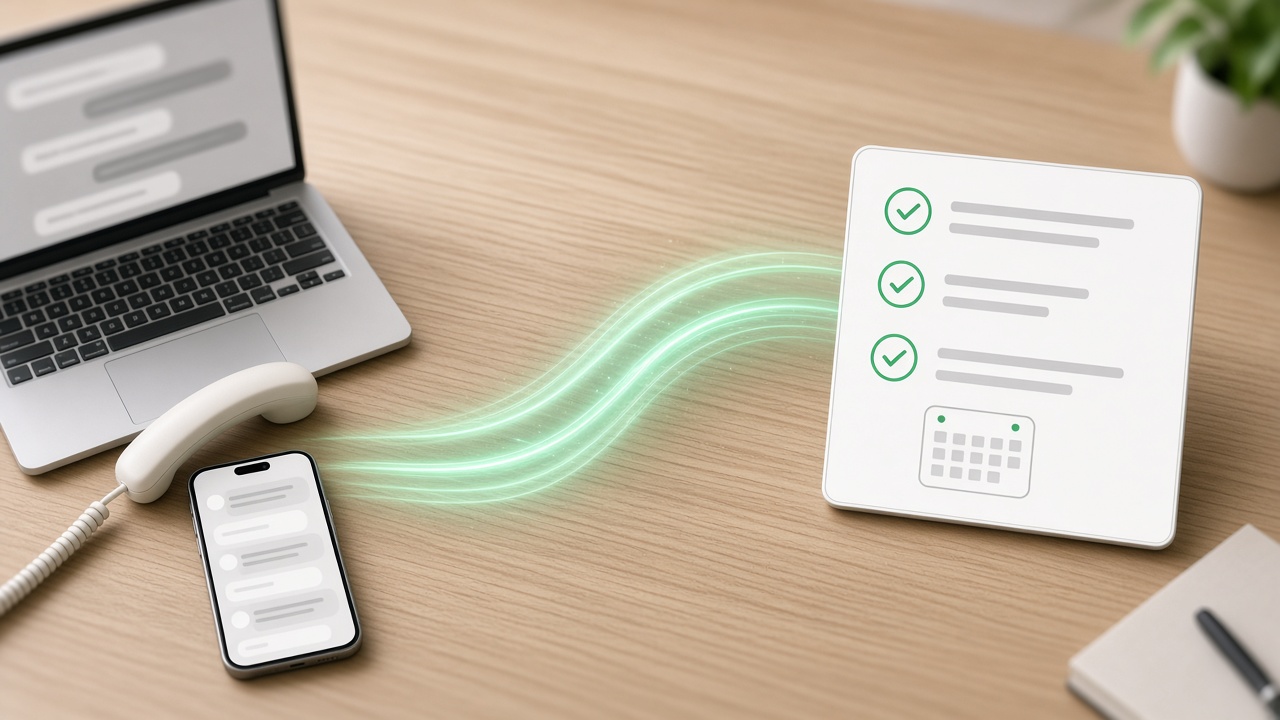
AI can help by interpreting these unstructured orders and converting them into structured order information.
For example, a customer might send an email saying:
“Can you send us 10 cases of chicken breast, 5 cases of wings, and 3 cases of ground beef for Friday?”
Instead of an employee manually creating the order from scratch, an AI-powered ordering system can identify:
- The customer
- Products requested
- Quantities
- Requested delivery date
- Relevant product information
The order can then be reviewed and processed before being sent to the ERP.
Why this matters
The ERP doesn't need to change.
The ERP can continue to be the system responsible for the final order, inventory, accounting, and fulfillment processes.
AI simply helps eliminate the manual work that happens before the order reaches the ERP.
2. Automate Customer Reordering
Food distribution is naturally suited to repeat purchasing.
Restaurants, retailers, institutions, and other commercial buyers often purchase many of the same products repeatedly. But identifying what a customer is likely to need can still require employees to review previous orders or rely on their own knowledge of the account.
AI can help make reordering more proactive.
By analyzing purchasing patterns, an AI-enabled ordering platform can help identify:
- Products a customer regularly purchases
- Typical order frequency
- Products they haven't purchased recently
- Changes in purchasing behavior
- Potential reorder opportunities
For example, if a restaurant normally purchases a particular product every two weeks but hasn't ordered it in three weeks, that could be an opportunity for a sales representative to follow up.
AI uses information from the ERP and other existing systems to help sales teams identify opportunities that might otherwise be missed.
From order taking to sales assistance
This is an important distinction.
AI doesn't have to replace the salesperson.
It can give the salesperson better information about where to focus their time.
Rather than manually reviewing hundreds of customer accounts, a sales representative can spend more time talking to customers who have a genuine purchasing opportunity.
3. Help Customers Find and Order the Right Products
Food distributors often have large and complex product catalogs.
Customers may know what they want without knowing the exact product name or SKU. They may also describe products differently from how they appear in the distributor's system.
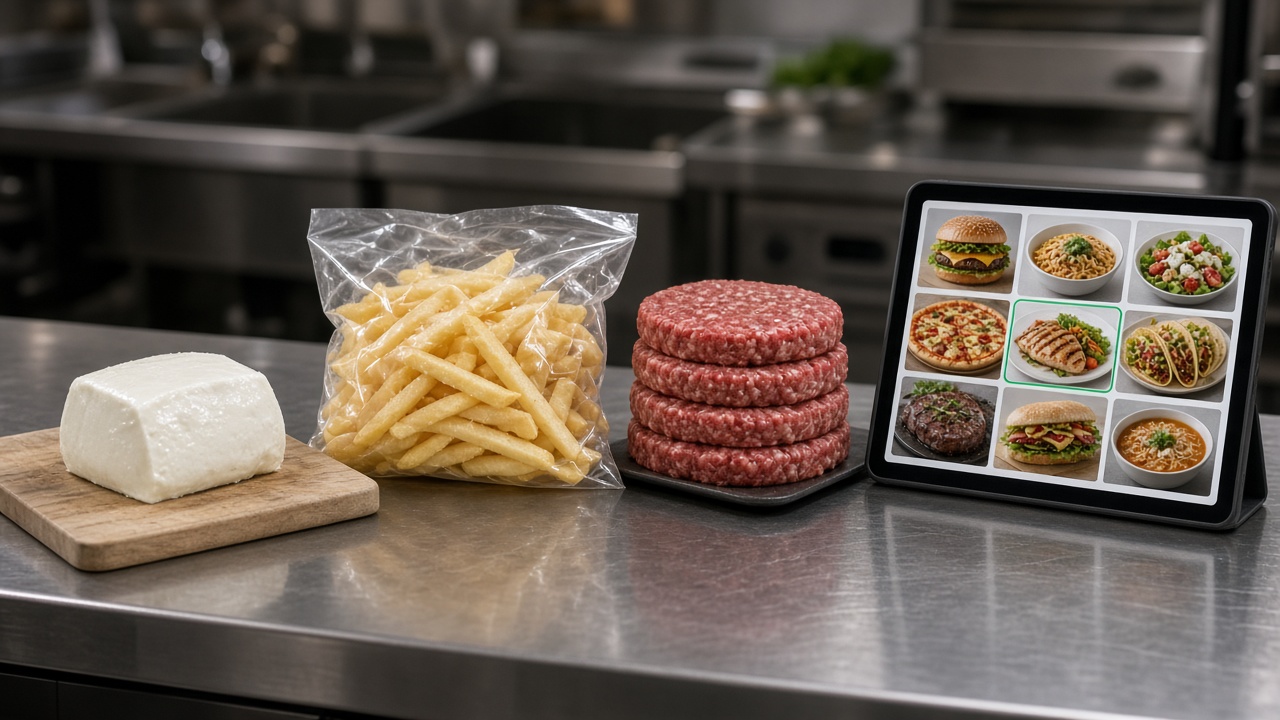
For example, a customer might ask:
“Do you have the same mozzarella we bought last time?”
Or:
“I need the 5 lb bags of frozen fries.”
AI can help interpret these requests and connect them to the appropriate products in the distributor's catalog.
This can make digital ordering easier for customers who don't want to search through hundreds or thousands of SKUs.
AI can also support natural-language product discovery, recommendations, and cross-selling.
For example:
Customer: “I'm ordering the burger patties we usually get.”
The system can identify the customer's previous purchase and surface the appropriate product.
It could then suggest:
“Would you also like to add burger buns and fries?”
Again, the ERP remains responsible for the underlying product, pricing, inventory, and order information.
AI simply provides a more intuitive interface for accessing that information.
4. Give Sales and Customer Service Teams Better Information
AI doesn't have to interact directly with customers to be useful.
It can also help internal teams understand what's happening across their customer base.
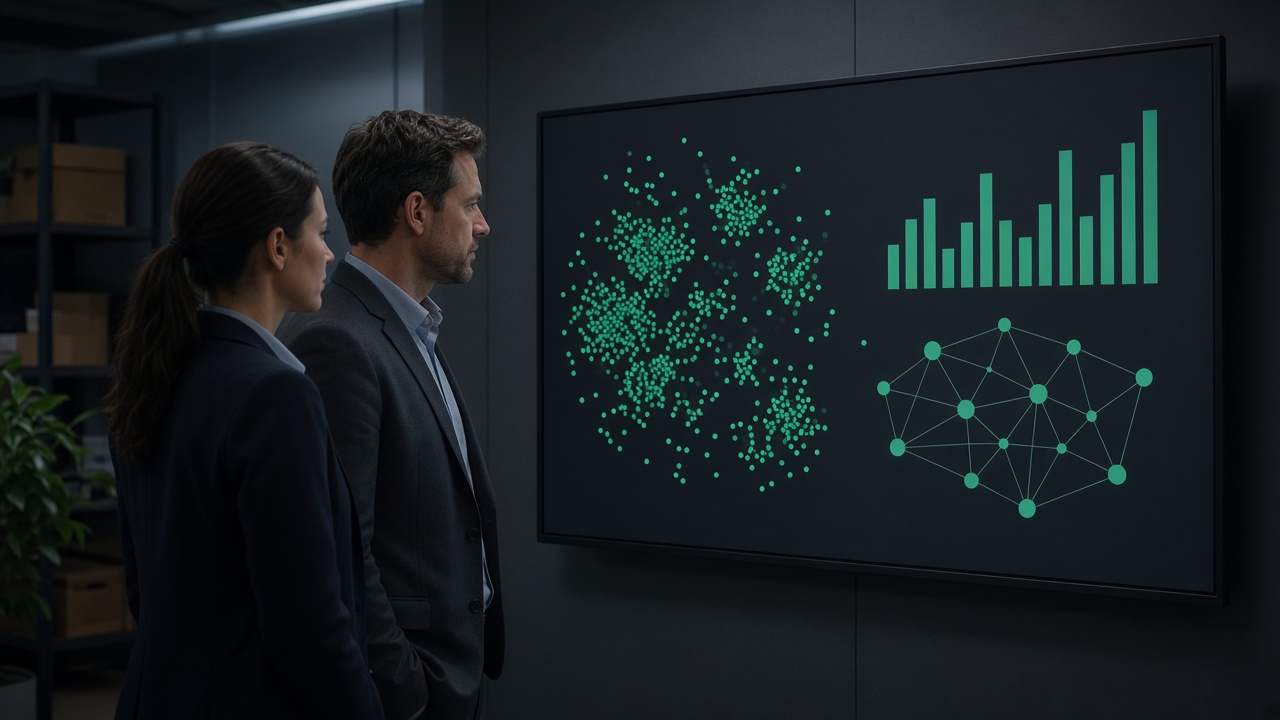
A food distributor may have thousands of customers and millions of historical order records. Finding useful information in that data can be difficult when employees have to manually pull reports or review individual accounts.
AI can make it easier to ask questions such as:
- Which customers haven't ordered recently?
- Which customers are ordering less than usual?
- Which products are losing volume?
- Which customers have stopped purchasing a particular product?
- What products are frequently purchased together?
- Which accounts might have cross-selling opportunities?
- Which customers have changed their purchasing patterns?
Instead of replacing the distributor's existing reporting or ERP system, AI can provide another layer for interpreting the information already available.
This can turn data that is normally used for record-keeping into information that helps drive sales decisions.
5. Automate the Work Around the ERP
Perhaps the biggest opportunity is not replacing the ERP at all.
It's reducing the amount of manual work required to get information into and out of it.
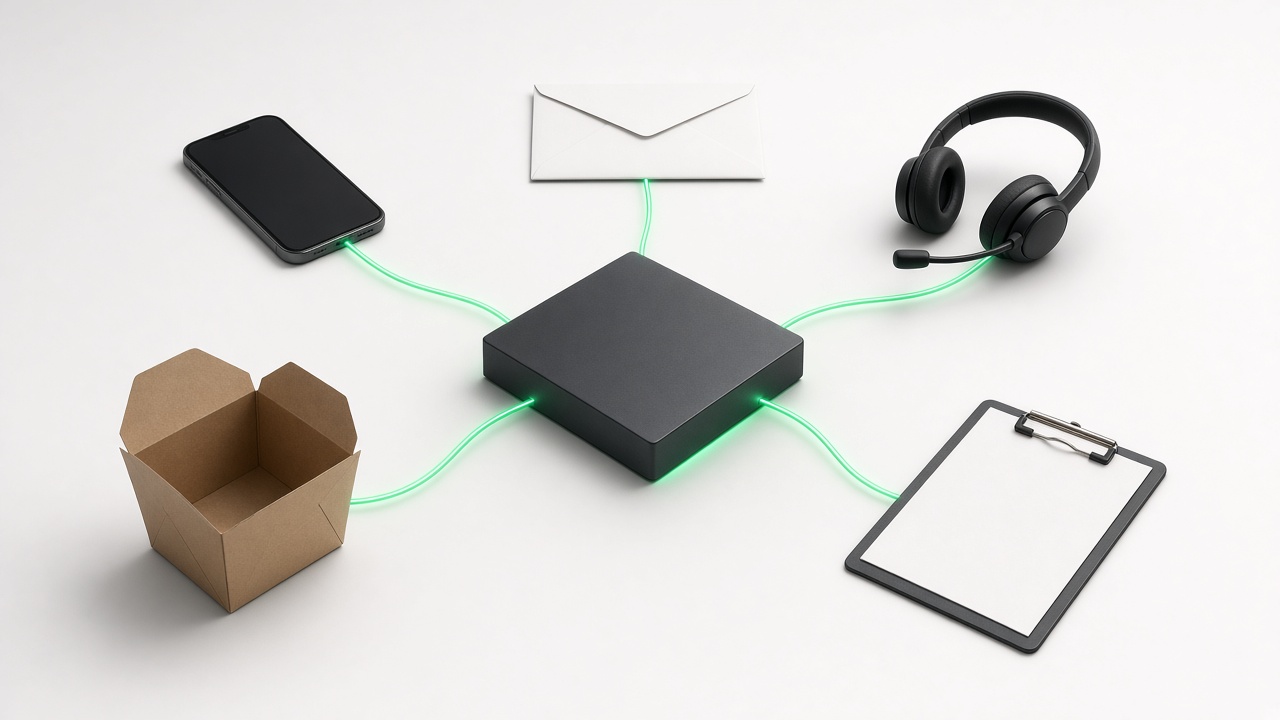
Think of your ERP as the core system of record.
AI and other automation tools can sit around it and handle repetitive processes such as:
Customer communication → AI interprets request → Order created → Human review → ERP → Fulfillment
Or:
ERP data → AI analyzes purchasing behavior → Sales opportunity identified → Sales representative follows up
This approach allows distributors to modernize specific workflows without undertaking a massive ERP replacement project.
The key is choosing the right layer to automate
Not every process needs AI.
Your ERP should continue doing what it already does well.
AI can focus on areas where human employees currently spend significant amounts of time interpreting information, entering data, searching for patterns, or communicating with customers.
You Don't Need to Replace Your ERP to Adopt AI
For food distributors, the conversation around AI shouldn't necessarily start with:
“What system should we replace?”
It should start with:
“Where are our people spending time doing repetitive work that technology could handle?”
Your ERP can remain the backbone of the business while AI improves the processes surrounding it.
That could mean automating orders that arrive through email and voicemail, helping customers find products, identifying sales opportunities, or giving employees faster access to insights from customer data.
The goal isn't to replace the systems that already work.
It's to make them more useful.
Where Should Your Business Start?
If you're considering AI for your food distribution business, start by identifying the workflows that are:
- High volume
- Repetitive
- Time-consuming
- Prone to human error
- Dependent on manually interpreting information
- Difficult to scale as your customer base grows
These are often the areas where AI and automation can deliver the quickest return without requiring an ERP replacement.
Freshline helps food distributors add digital ordering and AI-powered order automation around their existing systems, including workflows that turn customer emails, texts, and other order requests into structured orders.
Interested in seeing what AI-powered ordering could look like alongside your existing ERP? See how Freshline works →